Hip replacement surgery — technically called total hip arthroplasty — is one of the most common orthopedic procedures performed in the United States, with over 450,000 surgeries performed annually. The majority of patients are adults over 60, and the number one question every single one of them asks their surgeon is: “When can I start exercising again?”
The answer depends on what type of exercise you mean. Some movement starts within hours of surgery. Full return to fitness can take 3–12 months. And doing the wrong exercise at the wrong time can mean dislocation, setbacks, or re-injury. This guide breaks it all down clearly, with a week-by-week timeline built specifically for seniors.
At Se7en Symbols, we specialize in fitness for adults 60 and over — including those navigating recovery from joint replacement. Whether you’re preparing for surgery or already on the mend, this guide is for you.
Why Exercise After Hip Replacement Is Non-Negotiable
Rest is important — but too much rest after a hip replacement can actually set back your recovery. Here’s why getting moving (carefully) matters:
- Prevents blood clots: Early movement improves circulation and dramatically reduces the risk of deep vein thrombosis (DVT), which is a serious post-surgical complication.
- Rebuilds muscle: Surgery requires cutting through muscle and soft tissue. Without targeted exercise, those muscles atrophy quickly — especially in seniors already at risk of sarcopenia.
- Restores mobility and balance: Hip strength is central to your balance and stability. Physical therapy exercises rebuild this from the ground up.
- Reduces pain long-term: Counter-intuitively, appropriate exercise reduces post-op pain by improving joint mechanics and reducing inflammation.
- Supports mental health: Sedentary recovery is linked to higher rates of depression and anxiety in seniors. Movement helps.
The key phrase here is “appropriate exercise.” Not all movement is safe in the early weeks, and the exercises you choose — and when you choose them — matter enormously.
Hip Replacement Recovery Exercise Timeline
Week 1: The Hospital and Your First Days Home
Focus: Circulation, basic mobility, preventing complications.
You will likely be up and walking within 24 hours of your surgery with the help of a physical therapist. This isn’t optional — it’s part of your medical care plan. Early mobility prevents blood clots and lung complications.
Safe exercises in Week 1:
- Ankle pumps — flex and point your feet to promote circulation
- Heel slides — gently slide your heel up toward your buttocks while lying down
- Quad sets — tighten your thigh muscles while lying flat
- Glute squeezes — gentle contraction of the buttock muscles
- Short walks with a walker — 5 to 10 minutes, 3–4 times per day
What to avoid: Bending your hip past 90 degrees, crossing your legs, or rotating your foot inward. These positions risk dislocating the new joint.
Weeks 2–6: Early Home Recovery
Focus: Building strength, extending walking distance, reducing swelling.
By week 2, most patients are home and working with an outpatient or in-home physical therapist. Walking distance should be increasing gradually. You may transition from a walker to a cane around weeks 4–6, depending on your surgeon’s guidance.
Safe exercises in Weeks 2–6:
- Standing hip abduction — lift your leg out to the side while holding a support
- Standing hip extension — gently extend your leg behind you
- Mini squats — 0 to 30 degrees only, holding a stable surface
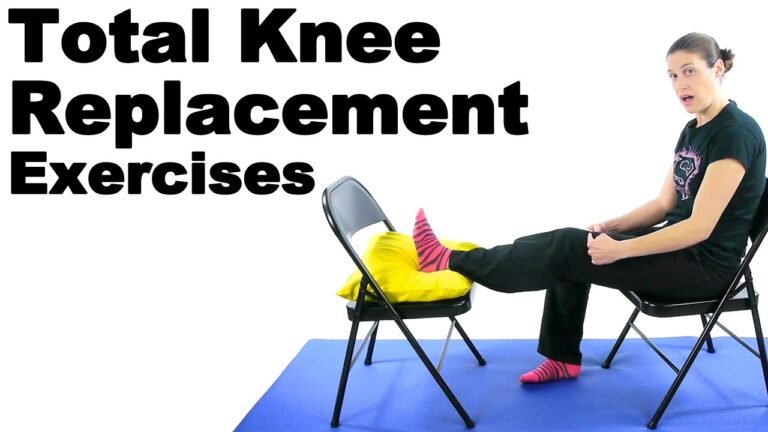
- Seated leg raises — sitting in a firm chair, straighten and lift your leg
- Walking on flat ground, gradually increasing duration
This is an ideal time to explore chair-based exercise routines that allow you to build strength without overloading the joint. Our senior-focused chair workout guides are designed with exactly this stage in mind.
Weeks 6–12: Progressive Strengthening
Focus: Return to normal daily activities, build strength and balance.
At your 6-week follow-up, your surgeon will assess your healing. Many patients get the green light to expand their exercise program significantly. Hip precautions may be lifted at this point (though confirm with your surgeon).
Safe exercises in Weeks 6–12:
- Full range squats (to 90 degrees) as tolerated
- Step-ups on a low step
- Stationary cycling — excellent low-impact cardio for hip mobility
- Water walking or pool exercises — buoyancy dramatically reduces joint load
- Resistance band exercises for hips, glutes, and legs
- Balance exercises: single-leg stands near a wall or chair
Resistance bands are particularly valuable during this phase. They allow progressive loading without the compressive forces of weights. Check out our guide to resistance band training for seniors for specific protocols.
3–6 Months: Return to Full Fitness
Focus: Rebuild cardio fitness, prevent sarcopenia, return to recreational activities.
This is where seniors on a solid recovery plan really begin to thrive. Muscle strength, balance, and stamina return. The risk of age-related muscle loss (sarcopenia) is real — but a well-designed strength program can reverse it.
Activities safe for most patients at 3+ months:
- Swimming and water aerobics
- Walking and light hiking on even terrain
- Cycling (stationary or outdoor)
- Light strength training with machines or free weights
- Yoga (modified) and tai chi for balance
- Dancing — yes, really! Low-impact dance is excellent hip rehab
Hip Precautions: The Movements to Avoid
Depending on the surgical approach used (anterior, posterior, or lateral), your surgeon will give you a specific list of hip precautions. These are movement restrictions designed to prevent dislocation of the new joint while soft tissue heals. Violating them can mean emergency surgery.
Common hip precautions (confirm with your surgeon — they vary):
- No hip flexion past 90 degrees — don’t bend forward at the hip beyond a right angle
- No crossing your legs or ankles
- No internal rotation — don’t turn your toes inward
- No low seating — avoid chairs, toilets, or car seats that are too low
- No twisting at the hip — pivot by turning your whole body, not just your upper half
Anterior approach surgeries often have fewer precautions than posterior approach. Ask your surgeon explicitly which approach was used and what your specific restrictions are.
Don't Forget: Nutrition Is Part of Recovery
Exercise and nutrition work together during hip replacement recovery. Muscle rebuilding requires adequate protein intake — a factor that is chronically low in adults over 65. Most seniors need 1.2–1.6 grams of protein per kilogram of body weight per day during recovery (significantly more than general RDA guidelines).
Key nutrients for hip replacement recovery:
- Protein: Lean meat, fish, eggs, Greek yogurt, legumes, and whey or collagen supplements
- Calcium and Vitamin D: Critical for bone healing and preventing stress on the new joint
- Omega-3 fatty acids: Anti-inflammatory; found in fatty fish, walnuts, and flaxseed
- Collagen peptides: Emerging evidence supports their role in soft tissue and joint recovery
Read our full guide on protein intake for seniors over 60 to understand exactly how much you need and the best dietary sources.
Equipment That Supports Your Recovery
The right equipment can make the difference between a safe, confident recovery and an injury. Here’s what we recommend at each stage:
Early Recovery (Weeks 1–6):
- Standard walker with tennis balls or glide caps for smooth floors
- Raised toilet seat (adds 3–4 inches to prevent dangerous low bending)
- Grab bars for bathroom and shower
- Long-handled shoe horn and sock aid (maintain hip precautions while dressing)
- Firm, high-seated chair with armrests
Progressive Recovery (Weeks 6–12+):
- Resistance bands (light to medium) — see our senior resistance band guide
- Adjustable cane with proper wrist height
- Stationary recumbent bike
- Pool noodles or aqua dumbbells for water exercise
- Non-slip exercise mat for floor work
Exercising After Hip Replacement If You Use a Wheelchair or Have Limited Mobility
Not every hip replacement patient starts from the same baseline. If you use a wheelchair, have other mobility limitations, or are recovering from complications, exercise is still absolutely possible — and still critical. Chair-based and wheelchair exercise routines can build significant upper body strength, maintain cardiovascular health, and support your overall recovery.
Upper body and seated exercises appropriate after hip replacement:
- Seated shoulder press with light dumbbells or bands
- Seated row with a resistance band anchored to a door
- Chest press seated with bands
- Arm circles and overhead reaches for shoulder mobility
- Deep breathing and diaphragmatic exercises for lung health
Our complete guide to wheelchair and seated fitness for seniors covers all of these in detail with video demonstrations.
Frequently Asked Questions
How soon can I walk after hip replacement surgery?
Most patients are walking with assistance within 12–24 hours of surgery. Early walking is encouraged — it’s part of the medical recovery protocol, not just rehabilitation.
When can I go up and down stairs?
Most patients can manage stairs by the time they are discharged from the hospital (days 1–3), using a step-to pattern (lead with the good leg going up, lead with the surgery leg going down — remember: “up with the good, down with the bad”). Full stair climbing typically returns around week 4–6.
Can I use a stationary bike after hip replacement?
Yes — stationary biking is one of the best early exercises for hip replacement recovery. It provides low-impact range of motion and cardio without high joint load. Most patients begin on a stationary bike around weeks 6–8, with the seat set high to avoid excessive hip flexion.
When can I return to swimming?
Water walking in a pool is often permitted around 6 weeks once your incision is fully healed. Full swimming strokes typically resume around 8–12 weeks, depending on your surgeon’s guidance.
Is it normal to feel pain during exercises?
Mild discomfort and muscle fatigue are normal. Sharp pain, joint pain, or increased swelling after exercise are warning signs to stop and contact your surgeon or physical therapist. Use the rule: if pain is above a 4/10, stop the activity.
Will I ever get back to my old activity level?
Most patients — especially those who commit to rehabilitation — return to full recreational activity within 6–12 months. Many report better quality of life than before surgery due to elimination of chronic hip pain. Research shows that consistent exercise both before and after surgery significantly improves outcomes.
Ready to Build Your Recovery Fitness Plan?
At Se7en Symbols, we’ve built our entire platform around the fitness needs of adults 60 and over — including those recovering from joint replacement, managing chronic conditions, or working around limited mobility. Our guides are written with real seniors in mind, not 30-year-olds with different bodies and different goals.
Explore more resources to support your recovery:
- Chair Workouts for Seniors: Build Strength Without the Floor
- Sarcopenia Guide: Stop Muscle Loss After 60
- Resistance Band Training for Seniors: A Complete Program
- Wheelchair & Seated Exercise for Seniors
- How Much Protein Do Seniors Need? The Complete Guide
Recovery from hip replacement is a journey — and you don’t have to navigate it alone. Bookmark this page, share it with a family member or caregiver, and come back as you move through each phase of your recovery.